ATTA / CORE TECHNOLOGY

A warehouse
that thinks.
And evolves.

Physical AI turns orders, robots, and equipment into one autonomous fulfillment system.

01 / Vehicle intelligence02 / Swarm intelligence03 / Warehouse intelligence
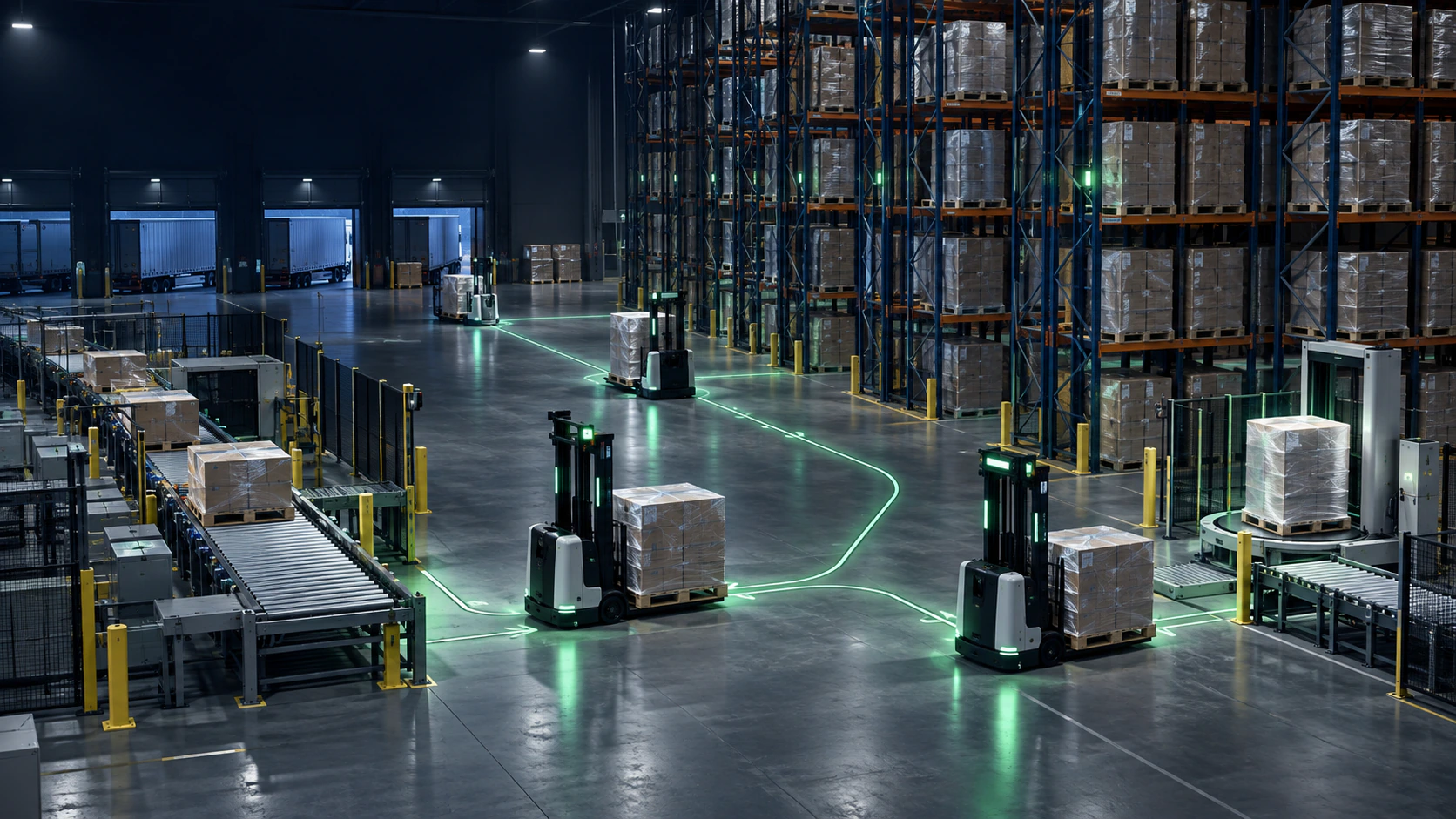
Concept illustration of autonomous pallet forklifts connecting inbound conveyors, dense storage, and wrapping equipment
ORDER-TO-OUTCOME FLOW
Illustrative visualization
01 Inbound02 Fleet + storage03 Equipment handoff

HOW A TASK MOVES

Give the system a result. It orchestrates the work.

01

Order arrives

WMS receives the work

02

AI plans

Match goods and destination

03

Swarm moves

Dispatch and route safely

04

Machines connect

Transfer, wrap, or store

05

Result confirmed

Update status and learn

THE INTELLIGENCE STACK

Three layers. One operating system.

Autonomy starts on each vehicle, emerges across the fleet, and compounds at the warehouse level.

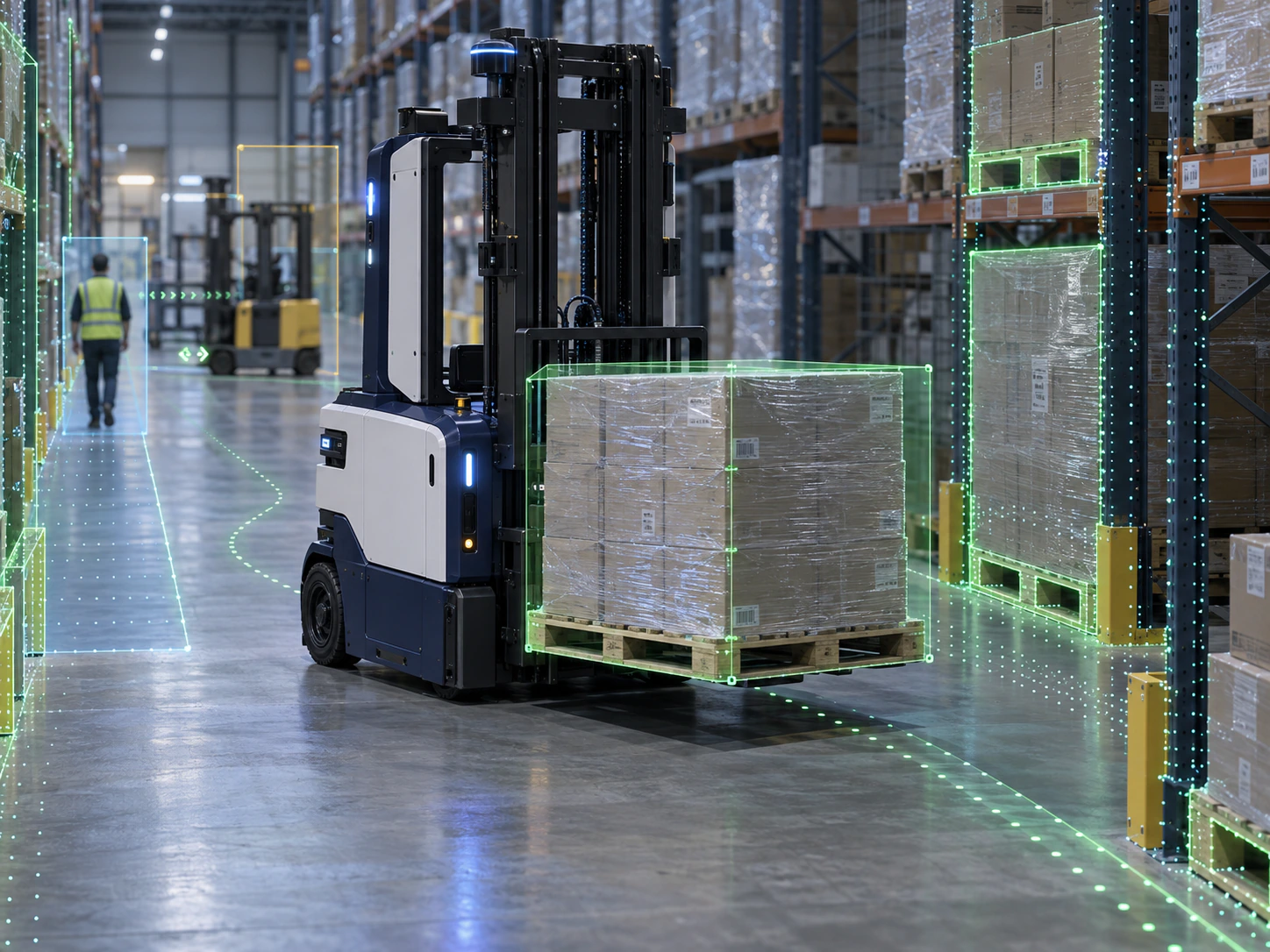
Concept illustration of an autonomous forklift perceiving pallets, rack edges, and a safe walking zone
SEMANTIC PERCEPTION
Illustrative
01

Vehicle intelligence

Every robot understands its world.

Autonomous driving combines localization, semantic scene understanding, obstacle response, and precise pallet handling at the vehicle edge.

PerceptionNavigationSafe execution
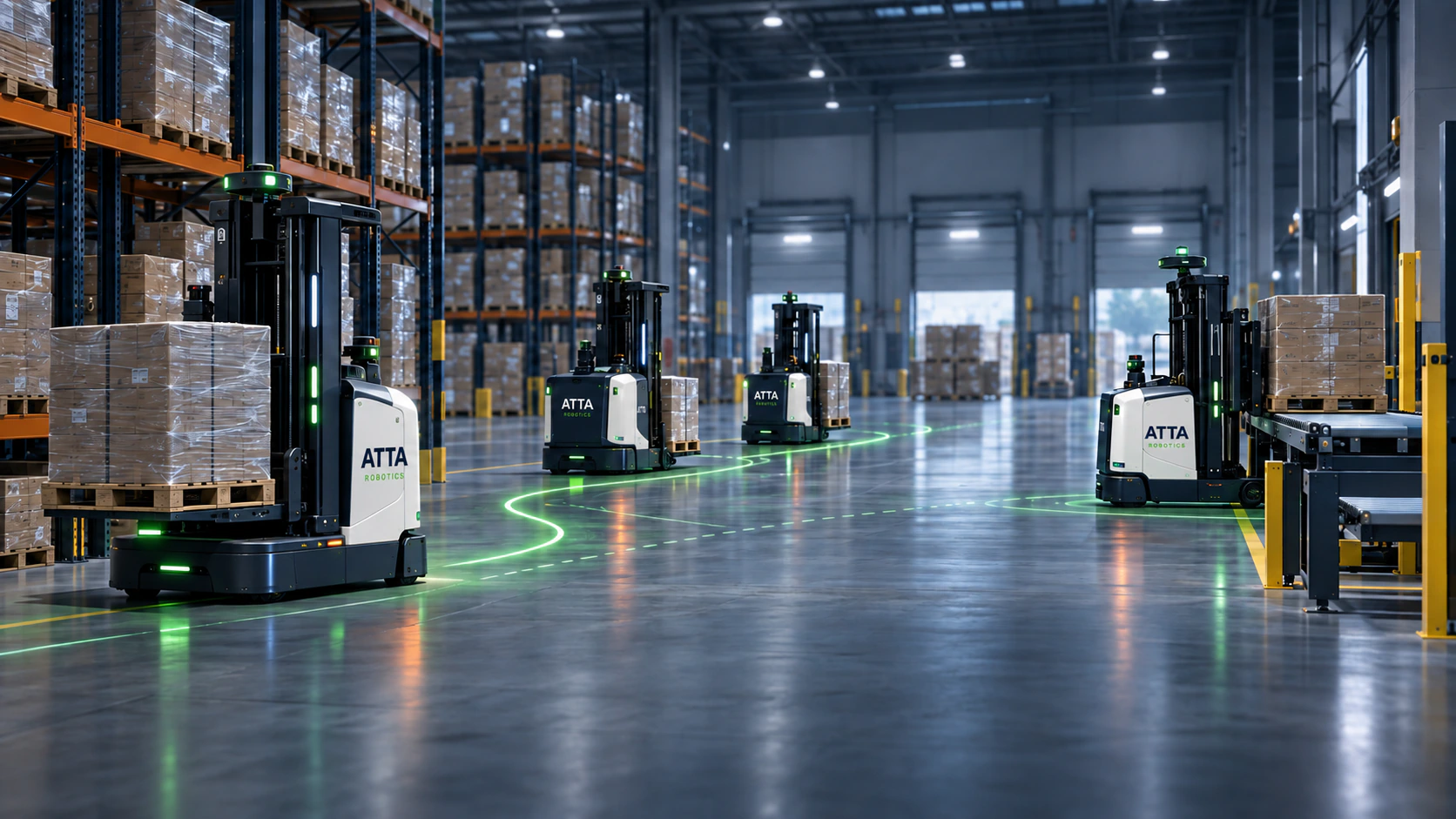
Autonomous forklift fleet coordinating pallet moves in a warehouse
COORDINATED FLEET
Tasks reroute around traffic
02

Swarm intelligence

The fleet acts as one system.

Tasks are matched to available vehicles. Routes, intersections, handoffs, and charging are coordinated around the work still to come.

DispatchTrafficEnergy
Concept illustration of connected autonomous forklifts, storage, conveyor, and packaging equipment
WAREHOUSE-WIDE FLOW
Illustrative
03

Warehouse intelligence

The whole operation can adapt.

Order and robot data reveal bottlenecks. Physical AI proposes slotting, flow, and capacity improvements, then measures the result in operation.

FulfillmentOptimizationLearning

WAREHOUSE INTELLIGENCE

From fulfillment to self-improvement.

ATTA regularly analyzes robot telemetry and order history. It identifies friction, recommends changes to storage and flow, and measures what improves after deployment.

Best-match goods to destinations and slots
Orchestrate movement from order to completion
Continuously refine routes, waves, and energy
ATTA / Optimization loop
CONTINUOUS

01 / INPUT

Robot + order data

Missions, travel, idle time, inventory, demand

02 / ANALYZE

Find the next improvement

Congestion, slotting, workload, charge windows

03 / ACT + MEASURE

Refine the operation

Apply policies and compare operating outcomes

Example optimization

Move fast-turning pallets closer to outbound, rebalance the next wave, and measure travel time after the change.

Feedback becomes the next decision

COMPOSABLE AUTONOMY

Skills turn decisions into results.

A growing library of warehouse skills composes the work. Connectors extend that workflow beyond forklifts to the equipment already on the floor.

Warehouse skill library

Expandable

Identify

Read load identity and context.

Slot

Choose a location for the work ahead.

Move

Assign the right robot and route.

Retrieve

Bring goods to the next process.

Recharge

Plan energy around demand.

Handoff

Coordinate the next machine or zone.

Equipment connectors

Connect the next device to the same task graph.

Roller conveyors

Transfer & induction

Robotic arms

Pick & place handoff

Stretch wrappers

Pack-out completion

Integration depends on equipment interfaces and site requirements.

ONE TASK. MULTIPLE MACHINES.

Order receivedRobot dispatchedPallet transferredWrappedReady to ship

The customer assigns an outcome. ATTA orchestrates the steps.

BUILT IN, NOT BOLTED ON

One stack. One accountable outcome.

WMS, RCS, energy management, vehicles, and connected workflows operate together inside the Physical AI warehouse.

WMSRCSEnergyVehiclesConnectors